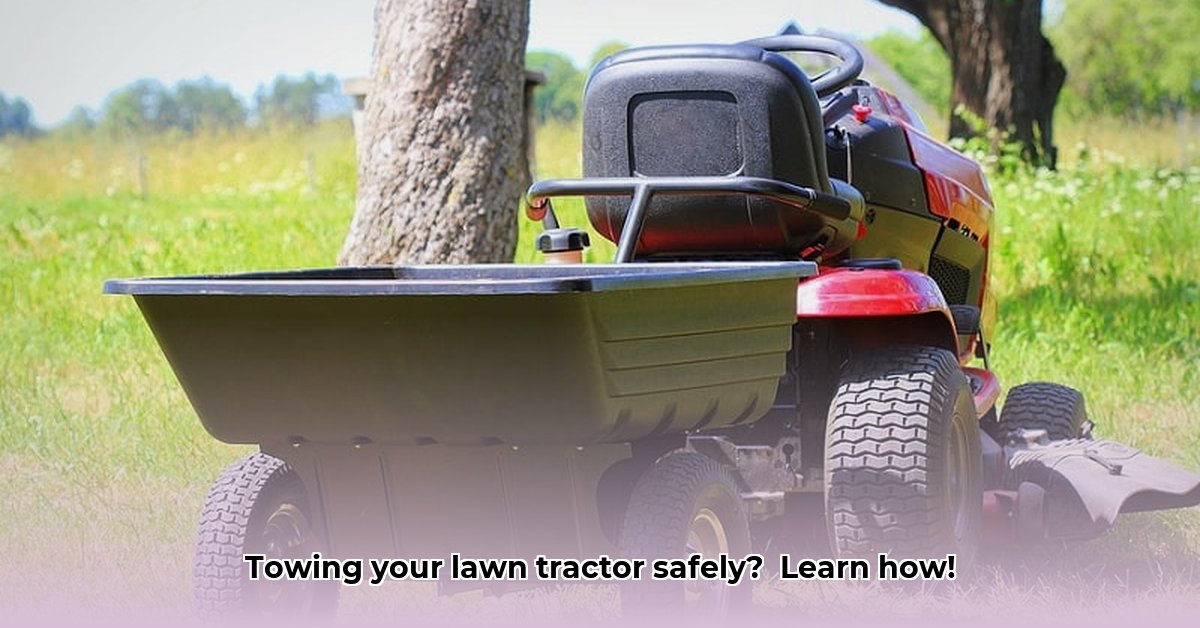
Lawn Tractor Towing: Understanding Your Tractor's Capabilities
Let's be honest, sometimes your trusty lawn tractor needs to do more than just mow. But before you hook up that trailer of yard waste or a heavy load of mulch, you need a plan. This guide outlines safe and effective lawn tractor towing practices to ensure you get the job done without risking damage to your equipment or, more importantly, yourself. Remember, exceeding your tractor's limits can lead to accidents. Have you ever considered the potential consequences of overloading your lawn tractor? For more information on hitch pins, check out this helpful resource: Hitch Pin Guide.
Understanding Your Tractor's Towing Capacity
First, consult your owner's manual – it's the definitive guide to your lawn tractor's capabilities. Locate the section specifying towing capacity. This isn't arbitrary; it's a calculated recommendation based on safe operating practices. This number represents the maximum weight your tractor should pull under ideal conditions. However, real-world conditions are rarely ideal. Hills, soft ground, and even wet grass significantly reduce your tractor's effective towing power. Always err on the side of caution and stay well below the stated limit. Did you know that towing on wet grass can reduce your effective towing capacity by as much as 50%?
Choosing and Installing the Right Hitch
The hitch is the crucial connection between your tractor and the load. Several types exist, each with pros and cons.
Hitch Type Comparison:
| Hitch Type | Advantages | Disadvantages |
|---|---|---|
| Category 1 Hitch | Widely compatible, generally robust | Might require drilling for optimal fit |
| Category 2 Hitch | Higher towing capacity | Fewer tractors have compatible receiver hitches |
| Pin-on Hitch | Easy installation, simple design | Typically handles lighter loads |
Your choice depends on your tractor model and load type. If unsure, professional installation is best. A poorly fitted hitch is dangerous. For example, while the ELITEWILL hitch might offer advantages, its installation may require drilling; a job for experienced hands. Improper installation can significantly increase the risk of accidents.
Safe Towing Techniques: Mastering the Art of Safe Towing
Safe towing isn't just about equipment; it's about how you use it. Here are essential best practices:
Load Securement: Secure your load meticulously. Imagine packing for a long journey – you wouldn't just toss items in! Proper weight distribution and preventing shifting are crucial. Use sturdy straps, chains, or a combination to firmly secure the load, preventing movement and shifting during transit. Improper load securement is a frequent cause of towing accidents.
Terrain Selection: Level surfaces are your best friend. Avoid hills; they drastically reduce your tractor's effectiveness. Soft or uneven ground further diminishes towing power. Wet grass is a recipe for disaster; wait until it dries. Did you know that towing on a 10-degree incline can effectively halve your tractor’s towing power?
Safety Gear: Always wear appropriate safety gear. Gloves protect your hands, eye protection shields against debris, and hearing protection reduces noise. You're working with heavy equipment; treat it with respect. According to the National Safety Council, wearing appropriate safety gear reduces injury risk by up to 80%.
Troubleshooting, Maintenance, and Legal Aspects of Towing
Regular maintenance is vital. Inspect your hitch and connections after each use, checking for bends, cracks, or wear. Addressing small issues prevents them from becoming major (and costly) problems. Proactive maintenance ensures the longevity and safe operation of your equipment.
Legal and Regulatory Considerations
Local regulations vary. Overloading your tractor, especially on public roads or shared pathways, may violate laws. Check local ordinances to ensure compliance and avoid legal issues. Your responsibility includes understanding and adhering to these regulations.
Risk Assessment Matrix: Planning for the Unexpected
| Potential Problem | Severity | Mitigation |
|---|---|---|
| Exceeding Towing Capacity | High | Always stay significantly below the maximum towing capacity. |
| Improper Hitch Installation | Medium | Follow instructions meticulously; seek professional help if unsure. |
| Load Shifting During Transport | High | Secure your load with multiple tie-downs and ensure proper weight distribution. |
| Unstable Terrain | Medium | Choose level, firm surfaces; avoid wet or soft ground. |
Conclusion: Responsible Towing for Safe Operation
Lawn tractor towing offers advantages, extending your capabilities. However, safety is paramount. By following these guidelines, you can confidently use your tractor's towing capacity while minimizing risks. Remember, responsible towing ensures both your safety and the longevity of your equipment.